

Baldness: How close are we to a cure?
Baldness: How close are we to a cure?
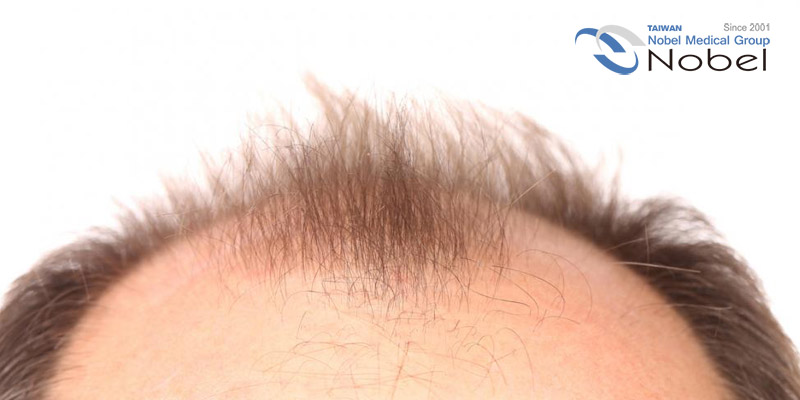
Baldness is an accepted part of the aging process for some, and a source of distress for others. Hair loss affects millions of men and women, yet despite decades of research, a cure is still not available. Just how close are we to finding a magic bullet for baldness? Medical News Today take a look at the evidence.
Androgenetic alopecia – which is more commonly known as male pattern baldness and female pattern baldness – is the most common type of hair loss, affecting around 30 million women and 50 million men across the United States.
In men, hair loss begins above both temples and recedes over time to form an “M” shape. Hair also tends to thin at the crown and may progress to partial or complete baldness. In women, the hairline does not recede and rarely results in total baldness, but the hair does usually become thinner all over the head.
Male pattern baldness is hereditary and may be linked to male sex hormones. Male hair loss can start as early as during adolescence. It affects two thirds of men by age 35, and around 85 percent of men by the age of 50.
The causes of female pattern baldness are unclear. However, hair loss happens most frequently in women after menopause, which indicates that the condition may be associated with decreasing female hormones.
With androgenetic alopecia affecting so many people, a permanent cure would not only lessen anxiety for a significant percentage of the population, but it would also prove financially advantageous to the pharmaceutical company responsible for the discovery.
Stages of hair growth, miniaturization
Hair is made up of the hair follicle (a pocket in the skin that anchors each hair) and the shaft (the visible fiber above the scalp). In the hair bulb, located at the base of the follicle, cells divide and grow to produce the hair shaft, which is made from a protein called keratin. Papilla that surround the bulb contain tiny blood vessels that nourish the hair follicles and deliver hormones to regulate the growth and structure of the hair.

Hair growth occurs in cycles. A hair follicle produces hair for a few years and then goes into rest mode for several years.
Hair follicles, much like all cells, have cycles. A natural part of the cycle involves shedding around 50 to 100 hairs per day.
Each follicle produces hair for 2 to 6 years and then takes a break for several months. While the hair follicle is in its rest phase, the hair falls out. There are around 100,000 follicles on the scalp, but because each follicle rests at a different time and others produce hairs, hair loss is usually unnoticeable. More noticeable hair loss occurs when there is a disruption to the growth and shedding cycle, or if the hair follicle is obliterated and replaced with scar tissue.
Scientists now understand that pattern baldness occurs through a phenomenon known as miniaturization. Some hair follicles appear to be genetically oversensitive to the actions of dihydrotestosterone (DHT), which is a hormone that is converted from testosterone with the help of an enzyme held in the follicle’s oil glands.
DHT binds to receptors in the hair follicles and shrinks them, making them progressively smaller. Over time, the follicles produce thinner hairs, and they grow for a shorter time than normal. Eventually, the follicle no longer produces hair, leaving the area bald.
Existing hair loss treatments
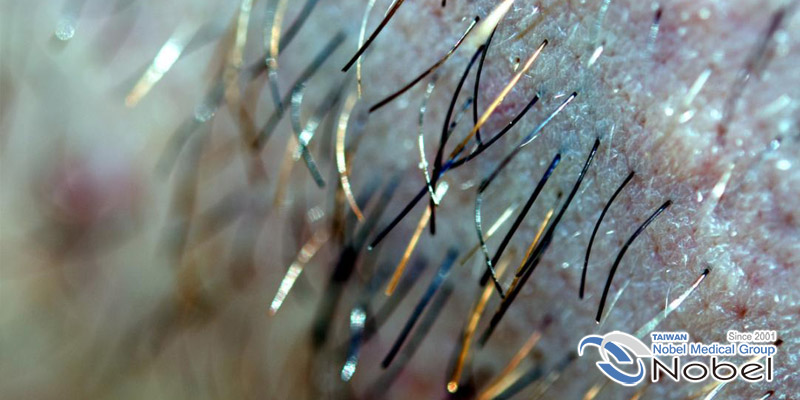
Hair transplants are one of the most permanent fixes for hair loss. However, as with all current treatments, it has its limitations.
Currently, there are few available treatment options to halt or reverse miniaturization. Most hair loss treatments only manage hair loss, rather than being a permanent solution.
The only two drugs approved by the U.S. Food and Drug Administration (FDA) to treat hair loss are minoxidil (Rogaine) and finasteride (Propecia).
Minoxidil
Minoxidil’s use for pattern baldness was discovered by accident. Minoxidil was widely used to treat high blood pressure, but researchers found that one of drug’s side effects was hair growth in unexpected areas.
Minoxidil lotion is applied to the scalp and may work by increasing blood flow, and therefore nourishment, to the hair follicles. The American Hair Loss Association say that most experts agree that Minoxidil is “a relatively marginally effective drug in the fight against hair loss.”
The treatment has zero effect on the hormonal process of hair loss, and its benefits are temporary. Hair loss continues if usage is discontinued.
Finasteride
Finasteride’s side effects of hair growth were stumbled upon during the development of a drug to treat enlarged prostate glands.
Finasteride inhibits type II 5-alpha-reductase, which is the enzyme responsible for converting testosterone into the more potent androgen DHT. DHT levels are reported to be reduced by 60 percent when the drug is taken, which prevents the susceptible follicles from being affected by the hormone and returning their normal size.
This treatment does not work in women, and its effect only remains for as long as it is taken.
Dutasteride
Dutasteride (Avodart) is used to treat prostatic enlargement. While the FDA has not approved the drug to treat hair loss, physicians sometimes prescribe dutasteride off-label for male pattern baldness.
Dutasteride works similarly to finasteride, but it may be more effective. Like finasteride, dutasteride inhibits the activity of type II 5-alpha reductase. However, dutasteride additionally inhibits type I of the enzyme. Blocking both types of the enzyme lowers DHT even more and reduces the risk of damage to hair follicles.
This drug faces the same limitations as finasteride, meaning that it only works if taken daily and might become less effective over time.
These therapies may slow down or prevent further hair loss, and they could stimulate regrowth from follicles that have been dormant but still viable. However, they can do little for follicles that have already become inactive. Using them at an earlier stage of hair loss will see more favorable results.
Hair transplantation
Hair transplantation involves harvesting follicles from the back of the head that are DHT resistant and transplanting them to bald areas. A surgeon will remove minuscule plugs of skin that contain a few hairs and implant the plugs where the follicles are inactive. Around 15 percent of hairs emerge from the follicle as a single hair, and 15 percent grow in groups of four or five hairs.
At the end of the procedure, the person will still have the same amount of hair – it will just be distributed more evenly around the scalp. Treating hair loss through surgical procedure can be painful and expensive. There is also a risk of scarring and infection.
Low-level laser therapy
Low-level laser therapy (LLLT) is a form of light and heat treatment. LLLT has been shown to stimulate hair growth in both men and women. Researchers hypothesize that the main mechanisms involved in the process is the stimulation of epidermal stem cells in the follicle and shifting the follicle back into the growth phase of the cycle.
New hair loss research, pipeline treatments
Existing medicines for treating hair loss have limited effectiveness and require ongoing use for the benefits of the treatment to continue.

KROX20 protein, SCF gene
Researchers from University of Texas (UT) Southwestern Medical Center in Dallas have identified a protein called KROX20, which switches on cells in the skin and tells them to become hair. Furthermore, these hair precursor cells then go on to produce a protein called stem cell factor (SCF), which plays a critical role in hair pigmentation.
When the SCF gene was deleted in the hair precursor cells in mice, they grew gray hair that turned white with age. Moreover, when the KROX20-producing cells were removed, the hair ceased growing, and the mice became bald.
“With this knowledge, we hope in the future to create a topical compound or to safely deliver the necessary gene to hair follicles to correct these cosmetic problems,” said Dr. Lu Le, associate professor of dermatology at UT Southwestern.
Future work by the team will focus on finding out whether KROX20 and the SCF gene stop functioning properly and lead to male pattern baldness.
Genetics underlying male pattern baldness
A study led by the University Edinburgh in the United Kingdom discovered 287 genetic regions involved in male pattern baldness. Many of the genes that the researchers identified were linked with hair structure and development.
“We identified hundreds of new genetic signals,” said Saskia Hagenaars, a Ph.D. student from the University of Edinburgh’s Centre for Cognitive Ageing and Cognitive Epidemiology. “It was interesting to find that many of the genetics signals for male pattern baldness came from the X chromosome, which men inherit from their mothers.”
Not only could the team’s findings help to predict a man’s likelihood of experiencing severe hair loss, but they could also provide new targets for drug developments to treat baldness.
Faulty immune cells
University of California-San Francisco (UCSF) researchers reported that defects in a type of immune cell called Tregs – which are usually associated with controlling inflammation – might be responsible for a different kind of hair loss: alopecia areata. They say that Tregs may also play a role in male pattern baldness.
In a mouse model, Michael Rosenblum, Ph.D., an assistant professor of dermatology at UCSF, and colleagues found that Tregs trigger stem cells in the skin, which promote healthy hair. Without partnering up with Tregs, the stem cells are unable to regenerate hair follicles, and this leads to hair loss.
“It’s as if the skin stem cells and Tregs have co-evolved, so that the Tregs not only guard the stem cells against inflammation but also take part in their regenerative work,” explained Prof. Rosenblum. “Now the stem cells rely on the Tregs completely to know when it’s time to start regenerating.”
JAK inhibitors
Hair growth can be restored by inhibiting the Janus kinase (JAK) family of enzymes that are located in hair follicles, according to investigators from Columbia University Medical Center (CUMC) in New York City, NY.
Tests with mouse and human hair follicles showed that applying JAK inhibitors directly to the skin promoted “rapid and robust hair growth.” Two JAK inhibitors that are approved by the FDA include ruxolitinib (for the treatment of blood diseases), and tofacitini (for the treatment of rheumatoid arthritis).
In a small clinical trial, Angela M. Christiano, Ph.D. – the Richard and Mildred Rhodebeck Professor of Dermatology and professor of genetics and development at CUMC – reported that treating moderate to severe alopecia areata with ruxolitinib triggered an average hair regrowth of 92 percent.
Prof. Christiano and team plan to expand their studies to include testing JAK inhibitors in other conditions and pattern baldness. “We expect JAK inhibitors to have widespread utility across many forms of hair loss based on their mechanism of action in both the hair follicle and immune cells,” she added.
Stem cells
Researchers from the Sanford-Burnham Medical Research Institute in San Diego, CA, developed a technique to generate new hair using pluripotent stem cells. This method would provide an unlimited source of cells without being limited to transplanting follicles from one part of the head to another.
Alexey Terskikh, Ph.D., associate professor in the Development, Aging, and Regeneration Program at Sanford-Burnham, and collaborators coaxed human pluripotent stem cells to become dermal papilla cells.
“We developed a protocol to drive human pluripotent stem cells to differentiate into dermal papilla cells and confirmed their ability to induce hair growth when transplanted into mice,” said Prof. Terskikh. The next step in their research is “to transplant human dermal papilla cells derived from human pluripotent stem cells back into human subjects.”
Although giant strides to cure baldness are being made in laboratories globally, research is ongoing and the wait for a permanent solution continues.
Recent Comments